

A few weeks ago I attended a conference called “LibCon2026,” held at the Watergate Hotel in Washington, DC. The topic: political liberalism, in all its complexities and ambiguities. The speaker lineup was really a “who’s who” of liberal thinkers of our time, including journalists Ezra Klein and Anne Applebaum, former White House Chief of Staff and Bulwark Editor Bill Kristol, political scientist Francis Fukuyama, and many others.
In the wake of the conference, one question I’ve been grappling with is how potentialism compares to political liberalism. Potentialism is a political philosophy we’re developing at the Beacon Project based on the idea that everyone has a gift, and a right and responsibility to develop and share it. Political liberalism (not to be confused with liberalism, the left-leaning ideology) is a political philosophy grounded, broadly speaking, in principles of freedom, dignity, and equality.
Is potentialism a specific kind of liberalism? Is it fundamentally at odds with liberalism? Or is it something else entirely?
Answering this question is more than just an abstract philosophical exercise. Both boosters and critics of modern political liberalism agree that the deep assumptions informing our current epoch are ones that emanate from the liberal tradition. So if we want to understand potentialism, it will be helpful to see how potentialism’s assumptions compare to those of the reigning paradigm.
The best way to approach this question is to examine each side of the potentialist equation: rights and responsibilities.
Rights
Let’s start with rights. Here, it is helpful to distinguish between two concepts: “negative liberty,” and “positive liberty.” At the heart of this distinction is the following question: What does it take for people to be truly free?
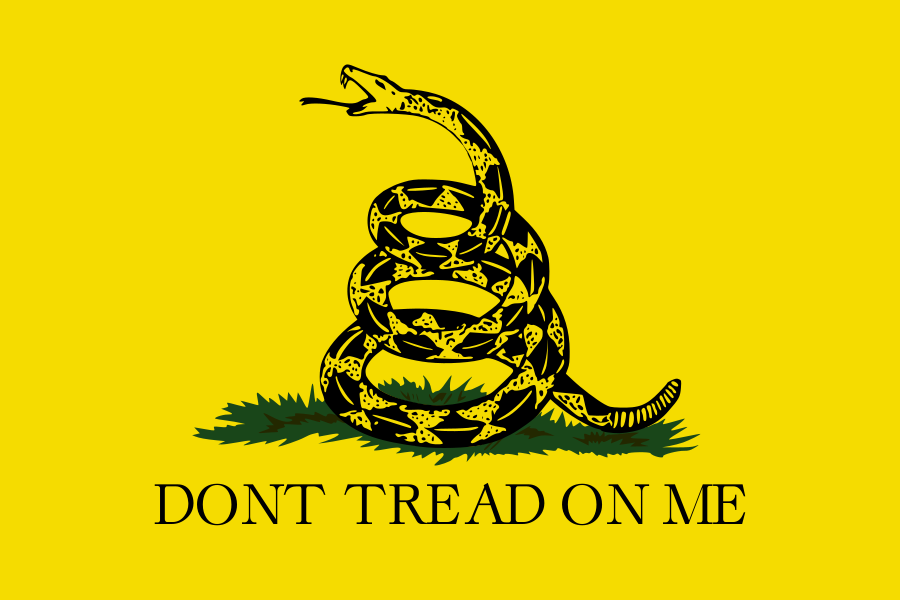
Proponents of negative liberty argue that freedom requires protection from interference. On this view, the purpose of the government is to do things like secure people’s life and property, guard against tyranny, and protect against foreign invasion. The phrase “don’t tread on me,” originally coined during the Revolutionary War, reflects this sentiment.
Proponents of positive liberty, by contrast, argue that true freedom requires more than merely protection from interference. It also requires the government to take an active role in ensuring people have access to the conditions necessary for them to flourish. According to this view, someone who lacks access to a quality education is not truly free., even if they are not being actively coerced by the government.
Negative and positive liberty mean very different things, but they both have a home in the liberal tent. Proponents of negative liberty include such figures as John Locke, the French philosopher Montesquieu (best known for pioneering the idea of the separation of powers), and the philosopher who originally developed the distinction between positive and negative liberty itself, Isaiah Berlin. These thinkers harbored a deep distrust of the state actively intervening in people’s lives, even with the ostensibly benevolent goal of creating better conditions for all. This perspective reached its apotheosis in the writings of neoliberal thinkers such as Friedrich Hayek and Milton Friedman, who, in light of the failures of socialism in the USSR and elsewhere, issued stark warnings about the dangers of concentrated state power.
Positive liberty, by contrast, has found its most vocal advocates in the 20th century, particularly following FDR’s New Deal. (Roosevelt famously said, “necessitous men are not free men.”) Other advocates include philosophers John Dewey, Amartya Sen, and Martha Nussbaum, the economist Joseph Stiglitz, and the political scientist Danielle Allen, all of whom have argued that a higher floor of opportunity secured by the state is necessary for human freedom.
Potentialism falls squarely in the ‘positive liberty’ camp. It argues that justice requires more than protection from coercion and tyranny. It also requires securing the conditions that allow everyone to explore, cultivate, and share their gifts. That’s a higher “floor” than what we currently have, and certainly higher than what proponents of negative liberty would advocate for.
Responsibilities
The picture becomes murkier when we turn to responsibility.
When potentialism says people have a responsibility to share their gifts, it is making a statement about how we ought to live. It’s saying we each have a duty to work to identify what it is we have to offer the world, to cultivate the skills and mindset needed to realize this contribution, and to deploy it in ways that benefit others and give our lives meaning. It’s calling us to approach life in a certain way, to view ourselves and our relationships with others in a certain way, and to hold certain types of values. It is, in this way, painting a certain picture of what the “good life” looks like.
By some interpretations, this goes beyond the stipulations of liberalism. The whole point of liberalism, after all, is to remain neutral with respect to the good life.
This is a recurrent theme in literature on political liberalism. John Stuart Mill, for instance—arguably the godfather, or at least a godfather, of liberalism—famously wrote: “The only freedom which deserves the name is that of pursuing our own good in our own way, so long as we do not attempt to deprive others of theirs.
The point is also made vividly in the writings of the philosopher Michael Sandel. Liberalism, Sandel argues, conceives people as “free and independent selves, unbound by moral ties we have not chosen.” This approach to politics “makes it difficult to account for civic obligations and other moral and political ties.”
Similarly, the political theorist Judith Shklar wrote:
“Apart from prohibiting interference with the freedom of others, liberalism does not have any particular positive doctrines about how people are to conduct their lives or what personal choices they are to make.”
These interpretations are tough to square with the view that everyone has a responsibility to develop and share their gifts.
But other perspectives paint a different picture. Consider the following passage by Jonathan Rauch in a recent article, entitled “Liberal Societies Need Grand Stories About Themselves.”
Values liberalism agrees that liberals embrace no single vision of the good, but it rejects the notion that liberalism is value-neutral. To the contrary, liberalism presupposes and promulgates a hefty bundle of values, such as empathy, reciprocity, fairness, equality, lawfulness, truthfulness, forbearance, and (of course) freedom. Values liberalism draws inspiration from (among others) the philosopher John Rawls and the political theorist William Galston—and, more recently, from Alexandre Lefebvre, who writes, in his feisty 2024 book Liberalism as a Way of Life, “I propose that liberalism is a good way of life.”
From this point of view, liberalism is in fact perfectly compatible with taking a stand about better or worse ways to live one’s life. In particular, one could imagine adding “contribution” to the list of values Rauch enumerates, thus making potentialism compatible with liberalism.
Corroborating this view, in The Lost History of Liberalism, the historian Helena Rosenblatt argues that political liberalism traces its roots back to a much richer moral tradition than the current “thin” moral vision it is associated with today. She writes:
“For centuries...being liberal meant something very different [than it does today]. It meant being a giving and a civic-minded citizen; it meant understanding one’s connectedness to other citizens and acting in ways conducive to the common good.”
In sum, there are two competing interpretations about whether advocating for the responsibility to share one’s gifts is compatible with political liberalism. In one interpretation, potentialism is not compatible with liberalism because it violates liberal neutrality by advocating for a particular conception of the “good life” (namely, one that entails developing and sharing one’s gifts); in the other, it is compatible with the type of historical liberalism Rosenblatt describes.
My Take: The Potentialist Expansion Pack
I’m going to be honest: I’m confused. I don’t know the answer. I feel like the philosophical waters have gotten so muddied about what political liberalism actually is that it’s hard to know what’s what.
But in the spirit of inquiry, I’ll share with you the best analogy I’ve come up with about the relationship between these political philosophies.
I don’t think potentialism is incompatible with liberalism, nor do I think it’s simply another name for liberalism. I think it’s an extension of the liberal tradition. It is, to borrow an analogy from the world of board games, an expansion pack.
An expansion pack is an add-on sold separately from an original board game that retains many of the game’s core features, while introducing modifications that result in meaningful differences in game play. It is often in the same spirit of the original game, but also imposes new incentives, rules, and strategies.
For true devotees, expansion packs open up new worlds of enjoyment. Consider this description from a five-star review of the Cities and Knights expansion pack for the board game Settlers of Catan:
“Cities & Knights expansion has completely revitalized my gaming experience with Catan and friends. It adds a strategic depth that makes every game feel fresh and challenging.”
I think something similar can be said about potentialism.
Liberalism says that society should be governed by rules of freedom, dignity, equality, and respect. It also says that the state should remain neutral with respect to different versions of the good life.
Potentialism says, “Yes! Let’s have all of these things. Freedom. Fairness. Dignity. And let’s agree that the state should not tell people how to live their lives. But let’s spice things up a little bit. Let’s add some new rules to the board. Let’s recognize that each of us has something to bring to the table. And let’s agree that part of what it means to be a good member of society, a good citizen, a good player, is to figure out what that is and share it.”
That’s the potentialist expansion pack.
You have a gift. Your quest is to find it.
I love the idea of the expansion pack of potentialism onto liberalism. I think that there is one more expansion pack that I would add onto this. It's the focus that it not just the individual's sole responsibility to bring out their potential, but the potential in each of us requires relationship and witnessing of the potential emerging. Liberalism fatal flaw is the focus on the liberated individual; however, the liberated individual needs to have a focus on liberation in constraint of relationship. It's through that lens that we can develop the capacity to help cultivate and create the potential in ourselves by bringing out the potential in others.
This is well-constructed and I basically dig the expansion pack metaphor (which you might expect from someone who used to design game expansion sets!)
I think, w/r/t this: “The whole point of liberalism, after all, is to remain neutral with respect to the good life,” there’s a distinction to make w/r/t *who* is remaining neutral. You point this out w/the Rauch etc, but IMV liberalism is saying “we want the STATE to remain neutral regarding A SPECIFIC INSTANTIATION of the good life,” which in turn is a claim about i) levels of resolution - the state doesn’t have to postulate out the existence of the good life or a role in it - and ii) the opportunity for private/civic organizations.